iMicro XL15 on Kickstarter: A Fingertip Phone Microscope With 21 mm Working Distance


Put a phone microscope over a circuit board and you learn quickly how close it wants to be. Many have to work very close to the subject, which makes anything sunk below a surface hard to reach. The iMicro XL15 is a fingertip lens built to give that distance back.
QingYing E&T, the Shanghai team behind the iMicro fingertip microscopes, has been making them since 2018 and has run its earlier models on Kickstarter. TIME named one of them, the iMicro C, among its Best Inventions of 2022. The XL15 joins the line as a kit with a lighting module and a focusing stand. The iMicro XL15 price on Kickstarter is $68.
When you purchase through links on our site, we may earn an affiliate commission. Here’s how it works.
📈 iMicro XL15 Campaign: $79,015 raised from 1,009 backers, goal $10,123, 44 days left
💰 Kickstarter Special: $68 (CA$95); Early Bird $64 (CA$89, 28 of 275 left); Super Early Bird sold out
📦 Delivery: estimated April 2027
Quick Verdict
Our verdict: 8.6/10
Who Is It For?
It suits students discovering science and their teachers, who get a smartphone microscope without a lab bench, and makers and engineers who inspect tiny parts on electronics. Creators who photograph textures, and anyone curious about everyday objects, can use it with the phone they already carry.
Main Strengths
A 21 mm working distance leaves room to reach into recesses and to aim light at the subject.
A 10 mm field of view makes a subject easy to locate and shows its overall structure, not just a fragment of it.
The removable, battery-powered lighting module lets you choose the angle and color of the light instead of relying on the phone's flash.
Measurement comes in the box, so images can carry real sizes.
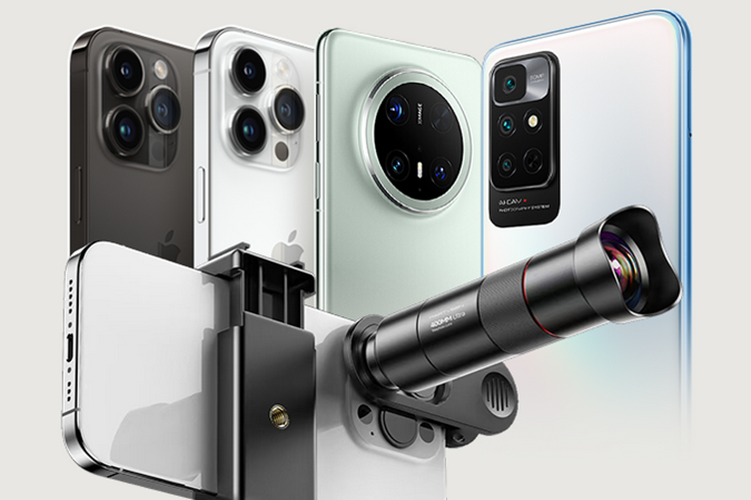
It attaches to most smartphones and tablets with no dedicated phone case or adapter, and the whole kit packs into a slim, card-like box.
Main Limitations
Magnification runs from 25x to 120x, far below the 1200x of the maker's own iMicro Q3p.
Results depend on the phone: QingYing E&T measured about 3 μm with a telephoto camera and about 8 μm with a wide-angle one.
The campaign does not publish a battery-runtime figure for the lighting module, and Depth Enhancement (focus stacking) is not yet in the i-SEEING app.
Is the iMicro XL15 Worth Backing?
Yes, for students, makers and curious households who want to see and photograph small things without a desktop microscope. Anyone who needs the highest magnification for the finest structures should look at the Q3 line instead. The decisive reason is the working distance, which opens up three-dimensional and recessed subjects: the iMicro XL15 on Kickstarter.
iMicro XL15 Price on Kickstarter
The iMicro XL15 price on Kickstarter is $68, converted from the campaign's CA$95. That is the Kickstarter Special, the one we recommend: it holds the full kit, with the XL15 lens, the lighting module, the FS-5 focusing stand, the μRuler M, the i-SEEING app and an instruction sheet in a thin PP case that doubles as a lightbox. An Early Bird at $64 (CA$89) carries the same kit but is limited to 275 units. Delivery is estimated for April 2027, and both open tiers ship anywhere in the world.
The Kickstarter Special needs no further purchase to start, and the Early Bird saves only $4, so its cap is not worth chasing. The price holds up: the lighting module and stand alone cost $28 as an add-on. The other add-on worth knowing is the Gen I Pack for $63, which adds five earlier iMicro lenses, the Q3p included, for anyone who also wants high magnification. It is $68 on Kickstarter.

What Is the iMicro XL15 and What Problem Does It Solve?
iMicro XL15: A Fingertip Smartphone Microscope Sold as a Pocket Kit
The iMicro XL15 is a round lens that sits over a phone's rear camera and turns it into a smartphone microscope. It holds on with a reusable nano-suction pad rather than glue or a clip, so it lifts off cleanly and goes back on the next time. Around it, the kit adds the pieces a phone lacks for close work: a light that can move and a stand that holds the phone steady.
The lens measures 12.7 mm across and 8.5 mm thick, weighs 1.2 g, and does not extend beyond the edge of the phone once attached. After use, the stand comes apart and every piece returns to the case. QingYing E&T filed its first patent on smartphone microscopy in 2012, and its earlier fingertip microscope models drew more than 40,000 pledges.
Why Phone Microscopes Stayed So Close to the Subject
The trouble is distance. When the lens must sit so near the subject, a part with height, or anything at the bottom of a narrow opening, is hard to observe. Even on a flat sample, the view covers only a small section, and on earlier iMicro lenses the light came mostly from the phone's own flashlight, with little control over its direction.
Raised components can now be studied as they stand, and contacts at the bottom of a narrow opening come into focus. The phone stays clear of the subject, and the sample can be repositioned beneath it.
iMicro XL15 Key Features and Specs: Working Distance, Field of View, Lighting, Measurement
21 mm Working Distance: Room to Reach Into Recesses and Light the Subject
Working distance is the gap between the front of the lens and the subject in focus. On the XL15 it is 21 mm, where many microscopes leave so little space that three-dimensional objects and hard-to-reach areas are difficult to observe. The campaign's demonstration is an earbud charging case, with the charging contacts sitting deep inside a narrow hole, and the XL15 brings them into view.
The same space makes the routine steps easier. Positioning a sample, refocusing and adjusting the light all happen with room to work.
10 mm Field of View and 3 μm Resolution: The Whole Part and Its Detail
A 10 mm field of view covers a much larger area while still capturing fine detail. An Apple Lightning charging connector fits in the frame whole, with the contacts still clearly visible, so finding a subject is easier before zooming in.
Under QingYing E&T's test conditions, the XL15 resolves details down to about 8 μm with a wide-angle camera and about 3 μm with a telephoto camera. A precision grid calibration target photographed on a Redmi Note showed no noticeable distortion, even at the edges of the image.
Removable Lighting Module: Four Modes, UV Included, on Its Own Battery
The lighting module has a built-in rechargeable battery, so it needs no connection to the phone or a power bank. It sits in the carrying case, which serves as a sample stage, and lifts out when you want to place it at a different angle.
Direct light gives natural colors and a clear overall view, side light brings out surface texture and contours, reflective light creates distinctive effects on different materials, and UV reveals fluorescence in suitable samples. The same sugar crystals look different under white, tilted white, UV-blue and red light.
FS-5 Stand, μRuler M and i-SEEING: Steady Focus and Measured Images
The FS-5 focusing stand was redesigned from backer feedback on the previous FS-3. It has a stronger, more robust structure, for better stability and more precise focus control while observing.
The μRuler M is a 4 × 6 cm stage micrometer with five patterns: 0.1 mm and 0.05 mm line scales, a 0.1 mm cross scale, and 0.5 mm and 0.2 mm grids. Photographed through the XL15, it calibrates the scale bar in the i-SEEING app, which can then show or hide the bar and share images with their measurement information.
Should You Back the iMicro XL15 on Kickstarter?
The iMicro XL15 is a phone microscope for everyday subjects, from fabrics and minerals to electronics. A student checks the tiny hooks on a strip of Velcro, and an engineer looks over the small parts on a PCB assembly.
QingYing E&T has delivered over 70,000 iMicros to users in 75 countries. The Kickstarter Special is the recommended tier. The full kit is $68 on Kickstarter.
FAQ about the iMicro XL15 on Kickstarter
Which smartphones work with the iMicro XL15?
The iMicro XL15 fingertip microscope works with most smartphones and tablets that have a rear camera, whether single or multi-camera, flat or raised. The round lens attaches with a reusable nano-suction pad and needs no case or adapter. The pad holds best on a clean, smooth, non-porous surface, and rough or textured camera covers can weaken it.
How does the iMicro XL15 compare with the iMicro Q3p?
Both are fingertip smartphone microscopes from the same maker. The Q3p is a 1200x polarizing lens built for the finest detail. The XL15 stops at 120x but adds a 10 mm field of view, 21 mm of working distance and its own lighting module. The Gen I Pack add-on includes the Q3p.
Do I need the i-SEEING app to use the iMicro XL15?
No. The iMicro XL15 works with the phone's standard camera app or other camera apps. The i-SEEING app is recommended only when you want scale-bar calibration and measurement, and it is included with every kit.
Can the iMicro XL15 UV light be used for fluorescence microscopy?
Only for exploration. UV light makes some fluorescent materials glow with visible colors, but the effect depends on the material, and many objects show little or no response. QingYing E&T presents it as a discovery feature, not a substitute for specialized fluorescence microscopy.
Can I use the iMicro XL15 without the focusing stand?
Yes. The lens works directly on the phone for quick, handheld observation. For capturing images or video, the FS-5 stand gives a stable platform and more precise focus control, which makes sharp results easier to get.
About the Author

Jonathan
Co-Founder & Reviewer at GizmoCrowd
Jonathan is Co-Founder of GizmoCrowd and a crowdfunding strategist with over 15 years of hands-on campaign experience on Kickstarter and Indiegogo.
Read more...