


Miniature Games on Kickstarter: The Complete GizmoCrowd Guide to Wargames, Warbands and 3D Printable Miniatures
Miniature games on Kickstarter represent one of the most demanding and most rewarding categories in tabletop crowdfunding. The numbers define the ceiling: Kingdom Death: Monster raised $12.4 million, Trench Crusade raised $3.33 million from 20,170 backers in 14 days, Obsidian Protocol raised £279,368 from 1,592 backers for a mecha wargame fifteen years in the making. Between those landmarks and the campaigns that fund at 200% and deliver in six months sits the most creative, most passionate, and most unforgiving backer community in the tabletop space.
The appeal is clear. Squad-level tactical combat. Faction asymmetry that rewards deep knowledge of your chosen force. Miniature painting as a hobby extension of play that turns every game into a personal creative statement. The risk is equally clear. Miniature production is the category where scope creep, manufacturing delays, and fulfillment complexity most frequently turn a funded campaign into a multi-year cautionary tale. Knowing the difference between a campaign built on credible infrastructure and one built on ambition alone is the only skill that separates backers who build great collections from backers who wait years for boxes that disappoint.
GizmoCrowd covers this category from the independent end of the market. Not the household names with seven-figure budgets and established distribution networks. The boutique studios, veteran designers, and former industry professionals who are making the miniature games, warbands, and 3D printable collections that larger sites do not have the infrastructure to notice. Every campaign reviewed on this page has been assessed against the same framework: creator credibility, sculpt quality, production infrastructure, fulfillment confidence, and whether the game or collection genuinely earns its place on your shelf.
This page is the map. Use it.
Last Updated: May 05, 2026
What Counts as a Miniature Game on Kickstarter?
Not everything with a miniature in it belongs in the same category, and conflating them costs backers money. GizmoCrowd uses three distinct classifications for everything reviewed on this page, because a backer evaluating a skirmish wargame is making a completely different purchase decision from a backer choosing an STL file collection for their resin printer. The category also sits at the intersection of miniature board games and traditional wargames tabletop culture - a shared audience that values both the physical craft of the hobby and the tactical depth of the game, and that the best campaigns on this page serve simultaneously.
Wargames and Skirmish Games are complete standalone systems. Rules, factions, miniatures as components of a playable game. You buy them to play a game, not to add figures to a collection you already own. Every campaign in this section ships a rulebook alongside the miniatures, and the miniatures are meaningless without it. The game design, the faction balance, and the ruleset's long-term playability are as important as the sculpt quality when evaluating these campaigns.
Miniature Warbands and Army Collections are faction ranges designed for use within existing wargame systems. They expand Trench Crusade, Warhammer 40,000, or any game using the 28-32mm standard. They do not come with standalone rules. They come with sculpts, lore, and when the creator is exceptional, a narrative coherence that makes every figure feel like a consequence of a story rather than a product in a catalogue. Evaluating these campaigns means evaluating the creator's sculpting credentials and fulfillment track record above everything else.
STL and 3D Printable Miniatures eliminate manufacturing and fulfillment risk entirely. You back them, download the files, and the printing is your responsibility and your printer's. This shifts the risk equation dramatically toward your hardware investment but removes the fulfillment variable that has historically killed physical miniature campaigns at the delivery stage. File quality, presupport integrity, and creator technical experience are the critical evaluation criteria here - not the renders, which any campaign can make look exceptional regardless of whether the underlying geometry will survive your slicer. For painters and kitbashers who want miniature wargaming games that double as a hobby project, both physical and STL campaigns offer that extension - the difference is whether you are painting a figure that arrived in a box or one you pulled off your build plate at 3am and cleaned up yourself. Both are valid. The decision is about your workflow, not your commitment to the hobby.
Wargames and Skirmish Games on Kickstarter
The skirmish wargame category on Kickstarter is where the highest creative ambition and the highest backer risk converge. A complete miniature wargame requires rules design, miniature sculpting, playtesting, manufacturing, and fulfillment to all succeed simultaneously - a production challenge that has defeated studios with far more resources than most independent creators command. When every element comes together, the result is a game that communities organise around for years. The campaigns reviewed below have all demonstrated the infrastructure, design credibility, and creator track record to justify that confidence. The miniature wargames and skirmish games reviewed here span settings from 1930s Lovecraftian horror to Roman Imperial Germania to cursed fantasy islands and modern military engagement - a range that reflects the genuine breadth of wargames tabletop culture on Kickstarter rather than the dominance of any single aesthetic. Each campaign ships a core rulebook alongside its miniatures. Each one has been assessed for alternating activation mechanics, faction asymmetry depth, and whether the ruleset holds up past the first three games.
Lovecraftian and Horror Wargames on Kickstarter
The Lovecraftian skirmish wargame is one of the most demanded and least well-served niches in the independent miniature market. The aesthetic is everywhere - grimdark aesthetics, tentacled horrors, doomed investigators - but genuinely mechanical horror, where the game's systems reflect the psychological and existential texture of the Mythos rather than simply applying its visual vocabulary to a conventional combat framework, is rare. The campaigns in this section are built on that distinction. They do not use Lovecraft as decoration. They use it as doctrine, where Horror is a stat, Corruption is a resource, and the outcome of a session is shaped by forces that no amount of tactical skill fully controls. The 28mm and 32mm resin miniatures in this subcategory are also, without exception, among the most painterly in the hobby - the kind of grimdark miniature wargame figures that reward a careful wash, a considered highlight, and the kind of display base that makes a finished warband look like a diorama rather than a game piece.
Cosmic Horror Tabletop Game on Kickstarter - Spectre Miniatures
£54,246 raised | 403 backers | 419% funded | Late pledge open

Twelve years after founding one of the most credible modern realistic skirmish wargame studios in the independent market, Spectre Miniatures stepped into 1930s Lovecraftian America and built a tabletop game where nobody is the hero and the Mythos arrives as a mechanical actor rather than a backdrop. Eight fully asymmetric Assemblies - government suppression agencies, criminal freight operations, academic survivors, jazz musicians with occult leverage, and four cult factions each building toward a different Great Old One summoning - fight across 2x2 foot scenarios where a 40+ card Mythos deck reshapes the encounter unpredictably every game. Horror and Corruption track psychological damage alongside physical combat. Violence has consequences that scale beyond the body count. Late pledge open.
Fantasy Warband and Skirmish Games on Kickstarter
The fantasy warband format occupies a specific and valuable position in the miniature wargame landscape: small forces, fast play, deep campaign systems, and an imaginative freedom that historical and licensed wargames cannot match. The best fantasy warband campaigns on Kickstarter are built around world-building that makes the setting feel inhabited rather than generic, mechanical design that rewards player expression over faction mastery, and a solo and co-op mode that lets the game survive beyond the campaign group. The campaigns in this section deliver all three.
Brigands of Arja - Warband Game on Kickstarter Firelock Games
Firelock Games | $22,331 raised | 196 backers | 149% funded | Late pledge open

On a cursed island cut off from the empire that built it, warbands of 3 to 6 fully customisable warriors compete for the only currency that matters: infamy. Firelock Games, the Miami studio behind Blood & Plunder, Blood & Bayonets, and eight other successfully delivered wargame campaigns, built Brigands of Arja around three design commitments that are each rare and all three together almost unprecedented in the warband category: total warband customisation from stat line to weapon loadout to head option, a complete multi-game campaign playable in a single afternoon, and a monster ecosystem that makes the island itself as dangerous as any rival faction. Digital rewards already in backers' hands. Physical miniatures shipping late May. Ten delivered campaigns, zero misses. Late pledge open.
Historical and Adventure Wargames on Kickstarter
Historical miniature wargaming has a long tradition on Kickstarter, but the campaigns that transcend the category are the ones that use historical setting as a dramatic framework rather than a constraint. Roman legions in authentic formation against genuinely unknowable supernatural forces. Age of Sail captains making decisions with incomplete information about what is in the water. The campaigns in this section are built by studios whose historical research credentials are as strong as their game design credentials, producing miniature wargames where the period detail and the mechanical design reinforce each other rather than competing for the same creative attention.
Cohors Cthulhu: Tactics - Adventure Wargame on Kickstarter Modiphius Entertainment
£100,391 raised | 879 backers | 200% funded | Late pledge open
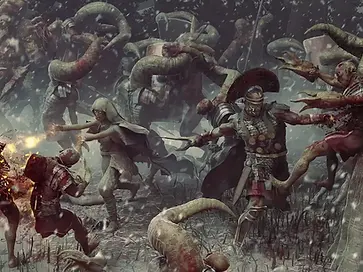
Rome at the height of its power, discovering that power means nothing when the Mythos arrives in force. Cohors Cthulhu: Tactics is a solo and co-op adventure wargame designed by Chris Birch and James Hewitt — whose credits include Necromunda, Adeptus Titanicus, Fallout: Wasteland Warfare, and The Elder Scrolls: Call to Arms — produced in Modiphius' own Cornwall manufacturing facility, and built around a three-act structure that scales from intimate skirmish encounters to full Roman legion warfare against the avatars of the Outer Gods. The Mendaxius AI system scales enemy tactical intelligence to your force size, making solo and co-op play as demanding as any competitive wargame. Thirteen delivered campaigns behind it. Miniatures already produced, packed, and shipping. The most credentialed campaign in this hub and the one with the most advanced fulfillment status. Late pledge open.
Modern Combat Skirmish Games on Kickstarter
Modern and contemporary military skirmish wargaming is one of the most technically demanding niches in the miniature game category - it asks creators to balance tactical authenticity with playability, and to produce miniatures detailed enough to satisfy collectors who care about equipment accuracy while keeping the game accessible enough to attract players who simply want a fast, satisfying skirmish on a small table. The campaigns in this section are built by designers with operational knowledge behind their mechanical decisions and enough game design experience to make that authenticity serve the player rather than obstruct them.
FIRE! Modern Combat Wargame on Kickstarter - SEN Games
€39,600 raised | 343 backers | 417% funded | Fulfilling
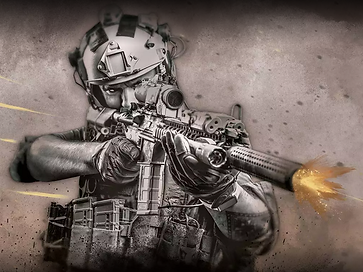
Squad-level modern skirmish wargaming distilled to its essential decisions: command point management, real-time action and reaction mechanics, dynamic initiative shifts, and a full engagement completable in under an hour. SEN Games, a Barcelona-based studio of industry veterans, built FIRE! around the conviction that modern combat wargaming should respect a player's time without sacrificing the tactical depth that makes the genre worth playing. Metal miniatures, modular terrain, and a core box that is self-contained from the first game. Solo, co-op, and full campaign modes planned for future releases.
Miniature Warbands and Army Collections on Kickstarter
Miniature warband and army collection campaigns occupy a fundamentally different creative territory from standalone wargames. They do not ask you to learn a new rules system. They ask you to look at thirty figures and feel something - to recognise in the sculpts a coherent vision of a faction, a culture, a moment in a fictional history that the creator has built with enough integrity that you want those figures on your shelf regardless of which game system you use to field them. The best campaigns in this category are built by creators whose sculpting credentials are not self-reported, whose lore earns its darkness rather than wearing it as decoration, and whose fulfillment track record makes the physical production question straightforward rather than agonising. Practically speaking, that means looking for campaigns that specify their resin supplier, name the scale and whether the figures are supplied unpainted and unassembled, and give you enough lore to understand what you are fielding before the box arrives. The miniature army Kickstarter market rewards creators who treat those details as obligations rather than afterthoughts - because backers who have assembled and painted hundreds of multi-part resin miniatures know exactly what corners look like when they have been cut.
Grimdark Miniature Warbands on Kickstarter
The grimdark miniature warband is the most crowded and most unevenly served subcategory in the independent miniature market. The aesthetic is easy to replicate - barbed wire, gothic architecture, corrupted religious iconography, figures bent under the weight of war and faith simultaneously. What is not easy to replicate is the lore depth that makes a grimdark warband feel like a consequence of a specific history rather than a collection of dark fantasy tropes assembled for visual impact. The campaigns in this section are built by creators who wrote the story before they picked up a stylus, and whose figures are legible expressions of that story rather than illustrations of an aesthetic.
Tales of the Trenches Miniature Warband - Kickstarter Campaign Axia Painting / Giuseppe Chiafele
| €23,821 raised | 215 backers | 270% funded | Late pledge open via MyMiniFactory

Eight hundred martyrs were beheaded on the Hill of Minerva the day the city fell. The sisters who survived made a decision. They deprived themselves of sight — not as punishment, but by choice, so they would no longer carry the evil they had witnessed. Their eyes were gathered and preserved in the Crypt of Eyes. They have been marching blind ever since. Giuseppe Chiafele, former Forge World and 'Eavy Metal painter with four successfully delivered campaigns, built 18 figures entirely around that single irreversible theological decision. Every sculpt is moving forward. There is no defensive pose in the range. Officially compatible with Trench Crusade as Trench Pilgrims and with Warhammer 40,000. Three STL file formats tested across three continents. Digital files delivered within 24 hours of pledge manager close, every campaign, without exception. Late pledge open via MyMiniFactory
Sci-Fi Miniature Army Collections on Kickstarter
The sci-fi miniature army collection occupies a specific and underserved position in the crowdfunding miniature market: faction-based figure ranges that give tabletop wargamers a complete, visually coherent army for any sci-fi battle system without requiring them to commit to the setting or price point of the major manufacturers. The best campaigns in this section are built around a clear faction identity - a distinct visual language, a defined scale, and a production chain with enough transparency that backers know exactly what they are receiving and when. Creator track record in the crowdfunding space is the defining evaluation criterion here: a sci-fi army collection requires manufacturing precision and logistical execution that first-time creators rarely have the infrastructure to deliver at acceptable quality.
Immortal Kings Sci-Fi Miniatures on Kickstarter James Franzen
| Funded | Late pledge status: check campaign page

The Omrath Army faction in dual format: physical resin miniatures produced by Strange Plastic in the USA, and presupported STL files delivered via Google Drive within 48 hours of campaign close. James Franzen brings sixteen prior Kickstarter projects created and 67 campaigns backed to a sci-fi army miniature collection that prioritises production transparency and backer accessibility over marketing spectacle. US manufacturing eliminates overseas production risk. The figure range brings a distinct visual identity to the sci-fi miniature space with sculpts designed for both tabletop use and collector display.
STL and 3D Printable Miniatures on Kickstarter
The emergence of STL and 3D printable miniature campaigns has created a parallel market that has fundamentally changed the risk calculus for miniature backers. When you back an STL campaign, there is no factory, no shipping container, no customs delay, no manufacturing variable that has historically turned physical miniature campaigns into multi-year ordeals. The files are delivered digitally, the printing is your responsibility, and the only questions that matter are whether the creator has the technical modelling experience to produce files that actually print, and whether the collection is worth the resin you will put into it.
The campaigns reviewed in this section answer both questions with a yes - but they answer them differently, across three distinct subcategories of the 3D printable miniature market that serve different audiences and different hobby needs.
Sci-Fi Figure Collections on Kickstarter
The sci-fi STL figure collection is the entry point for most 3D printing hobbyists entering the miniature crowdfunding space. A well-designed sci-fi figure collection gives a Game Master a complete alien encounter roster, a wargamer a flexible faction library compatible with any sci-fi system, and a painter a range of technically challenging sculpts with the kind of surface variety that makes a printing queue genuinely exciting. The defining quality marker in this subcategory is not the render - any creator can produce compelling renders - but the presupport integrity and the file geometry that determines whether those figures actually emerge from your resin printer intact. Technically, that means looking for creators who specify their layer height, confirm their files are FDM optimised as well as resin-ready where relevant, and ideally name the slicer - whether Lychee or Chitubox - in which their presupported files were built. A sci-fi STL miniature collection that delivers on those technical markers is one you can trust to perform across a range of printers, not just the specific model the creator used during testing.
Lunar War: Heirs of the Stars - STL Miniatures on Kickstarter Liloo Studios
| $1,181 raised | 20 backers | 118% funded | Campaign closed - no late pledge, no store, no future availability

Twenty-plus hand-sculpted 32mm sci-fi miniatures across three factions - astronaut soldiers, alien civilizations, and cosmic horror entities - presupported for resin printing by a creator with seven years of professional 3D modelling experience who states explicitly that AI was used only for coloring presentation renders, not for geometry or concept. The campaign operated on a permanent exclusivity model that Liloo Studios applies to every release: when it closed, it closed permanently. No late pledge, no store, no second run. For collectors who found this review after the campaign ended, this is the editorial record of what it was and why it earned its place here.
3D Printable Terrain and Vehicles on Kickstarter
Terrain and vehicle STL campaigns serve a fundamentally different need from figure collections. A wargamer building a 28mm sci-fi table needs more than painted figures - they need the environment those figures inhabit. Modular spacecraft, landing pads, industrial structures, and configurable interior layouts transform a bare gaming table into a setting with narrative logic. The best terrain STL campaigns are built by designers who understand the functional requirements of tabletop play alongside the visual ones: models that store flat, interlock without glue, and print reliably on FDM printers as well as resin. Technical design competence is the critical evaluation criterion in this subcategory, not visual ambition. The best terrain STL campaigns specify wall thickness, confirm OpenLOCK or equivalent compatibility where relevant, and provide file variants optimised for both FDM and resin printing. A modular terrain collection that works on a standard FDM printer at 0.2mm layer height is accessible to a far wider audience than one that requires a high-resolution resin setup - and creators who understand that distinction are the ones whose files end up on gaming tables rather than in abandoned download folders.
MTV Modular Trading Vessels — 3D Printable Terrain on Kickstarter gamesART / Philipp Posko
| €21,484 raised | ~255 backers | 215% funded | Delivered

Four modular 3D-printable spaceship designs - Type S compact hauler, Type M mid-range vessel, Type L command ship, and Type D dropship - built for 28mm sci-fi tabletop boarding-action encounters with configurable interior layouts and OpenLOCK-compatible part-swapping between hull types. FDM-optimised at 0.4mm nozzle and 0.2mm layer height. GridForge interior tile integration for fully playable ship interiors. The most technically detailed terrain STL campaign in this hub, built by a Neuss-based creator with multiple prior delivered spaceship campaigns and a design philosophy rooted in 1970s and 1980s industrial sci-fi aesthetics. Delivered.
Civilian and Character STL Libraries on Kickstarter
The civilian STL figure library is the most overlooked and most practically valuable subcategory in the 3D printable miniature market. Every wargame needs bystanders. Every RPG campaign needs NPCs. Every diorama needs the human scale reference that turns a scenic base from a miniature vignette into a believable moment. The major manufacturers do not serve this need - their figure ranges are built around combatants, heroes, and monsters. The campaigns in this section are built by creators who noticed that gap and spent years filling it systematically, producing civilian figure libraries that cover occupations, eras, and social contexts that the mainstream miniature market has never addressed. For wargamers building scatter terrain scenes, diorama builders working in 28mm to 54mm scale, and Game Masters who want printable NPC figures that look like people rather than adventurers, the civilian STL miniature collection is the most practical and most underrated category in the entire 3D printable miniature market - and the personal use license that comes with these files means every figure you print is yours to paint, base, and place on the table without restriction.
Regular People STL Collection — Civilian Miniatures on Kickstarter Double G Diecast / Greg Gonzalez
| Vol. 3: 700+ figures | Late pledge status: check campaign page

Three volumes. 700+ everyday civilian STL miniatures at 54mm scale - emergency services personnel, 1940s railroad workers, modern Japanese Yakuza, 1980s BMX riders, 1990s gangsters, contemporary hikers, Wild West scenes, car enthusiasts - designed for diorama building, RPG NPC scenes, and scale modeling. Single-piece construction, no assembly. Rescalable to any size. Greg Gonzalez has been building dioramas for 20 years and is building something with systematic intent: a figure library that covers every human situation the mainstream miniature market has chosen to ignore. Two prior volumes delivered.
The Most Successful Miniature Game Kickstarters of All Time
Understanding the ceiling of the miniature game category on Kickstarter is not optional context for backers - it is the calibration that makes every other number meaningful. The campaigns that define the upper boundary of what is possible in this category also define the operational demands that only the most resourced and experienced creators can meet. When Cohors Cthulhu raises £100,391 and ships in six months with thirteen prior campaigns behind it, that result is comprehensible only in the context of what the category's landmark campaigns looked like, cost, and took to deliver.
Kingdom Death: Monster 1.5 raised approximately $12.4 million - the largest purely miniature-focused Kickstarter campaign of all time as of 2026. A horror survival board game with miniature components of extraordinary sculptural ambition, produced by a single creator over years of development. The campaign that established the upper boundary of what a dedicated miniature community will fund when the creative vision is uncompromising enough.
Trench Crusade raised $3,331,943 from 20,170 backers in 14 days in November 2024. Goal: $66,666. Funded at 4,998%. Designed by Mike Franchina, whose credits include Diablo and Magic: The Gathering concept art, and Tuomas Pirinen, who designed Mordheim and Warhammer 6th edition rules. A grimdark WWI-horror skirmish wargame with a living rulebook free in perpetuity, STL-first delivery model, and a third-party compatible miniature ecosystem that exploded within months of the campaign closing. The most significant original miniature wargame Kickstarter of 2024 and the benchmark that every independent skirmish wargame campaign that follows it is now measured against.
Obsidian Protocol raised £279,368 from 1,592 backers at 558% funded - a cyberpunk mecha miniature wargame by QueTi Studio, Beijing, fifteen years in development before the Kickstarter launched. One of the most significant mecha wargame launches in the independent market and a demonstration that genre specificity combined with long development credibility can reach the upper tier of the miniature wargame category without a major studio behind it. GizmoCrowd has not reviewed this campaign.
Cohors Cthulhu: Tactics raised £100,391 from 879 backers at 200% funded - the most credentialed studio in this hub, thirteen delivered campaigns, miniatures already produced and packed before most backers had received their pledge manager confirmation. The campaign that demonstrates what the intersection of serious studio infrastructure and independent market positioning looks like at its most functional.
Never Miss a Promising Campaign
New crowdfunding projects launch daily across Kickstarter and Indiegogo. GizmoCrowd's newsletter delivers curated campaign selections directly to your inbox every week, highlighting projects before they hit mainstream attention.
Subscribe to GizmoCrowd Weekly
STL vs Physical Miniatures on Kickstarter: What Backers Need to Know
Every miniature campaign on Kickstarter forces a format decision before you pledge. The question seems binary. The reality is more nuanced than most campaign pages acknowledge, and getting it wrong costs money in ways that are not always immediately obvious.
Physical miniatures deliver the finished product to your door. No printer, no resin, no failed prints, no post-processing. The trade-off is the complete fulfillment risk profile of any physical product: manufacturing timelines, overseas production variables, shipping costs, customs fees, and the possibility that a campaign funded in year one is not in your hands until year three. Physical miniatures from studios with established manufacturing infrastructure - Modiphius in Cornwall, Strange Plastic in the USA, Madn3ss Casting Studio in Italy - carry a fundamentally different risk profile from campaigns contracting an overseas factory for the first time on an ambitious production scope. Identifying which situation you are backing is the most important due diligence a physical miniature backer can perform.
Currency risk is a practical consideration that most campaign pages understate. Physical miniature campaigns on Kickstarter are frequently priced in GBP or EUR rather than USD, which means non-UK and non-European backers are pledging at whatever the exchange rate is on the day they back — not the day the campaign launched, and not the day fulfillment ships. A campaign priced at £139 can cost meaningfully more or less in USD depending on when in the campaign window the pledge is made. GizmoCrowd notes the currency of every campaign in the Campaign Overview table precisely because this is the variable that most frequently surprises first-time backers of European independent miniature campaigns.
STL files shift the entire fulfillment equation. The files are delivered digitally within days or weeks of the campaign closing. There is no factory, no shipping container, no customs delay. The trade-off moves entirely to the backer's side: you need a resin printer, resin and consumables, the technical knowledge to operate both, and the willingness to accept that print quality depends on your hardware and skill as much as the creator's file quality. For backers who already print regularly, this is a straightforward exchange. For backers who are considering buying a printer specifically to back STL campaigns, the hardware investment warrants honest evaluation before the pledge.
Presupported files - the term that separates a professional STL campaign from an amateur one - means the support structures required for successful resin printing have been added to the file by the creator, tested across multiple printer models and printing environments, and confirmed to produce clean results before distribution. An unsupported STL file requires the backer to add those supports manually in slicer software. For experienced resin printers, this is manageable. For anyone new to resin printing, presupported files are not a convenience feature - they are the practical difference between a successful print session and a morning spent cleaning failed prints off a build plate.
What Makes a Miniature Wargame Kickstarter Worth Backing?
GizmoCrowd applies a consistent six-factor framework when evaluating every miniature game, warband, and STL campaign reviewed on this page. These are the questions behind every Quick Verdict section, stated plainly for backers who want to apply the same framework independently.
Creator track record. How many campaigns has this creator or studio delivered, at what scale, and with what communication quality during the process? A first-time creator with a beautiful product carries more fulfillment risk than a tenth-campaign veteran regardless of how compelling the campaign video is. Track record is not a guarantee of future delivery - it is the closest available proxy for one.
Production infrastructure. Where are the physical miniatures being manufactured, and by whom? A campaign that names its manufacturer, describes its production chain, and has an existing relationship with that manufacturer carries materially lower manufacturing risk than one where production plans are implied rather than stated. Named manufacturers with verifiable prior work on delivered campaigns are the signal to look for.
Rules quality and playtesting depth. For wargames specifically: has the ruleset been playtested beyond the creator's immediate circle? Is a quickstart or beta available to evaluate before pledging? Rules that emerge fully only at fulfillment carry their own risk category - not that the miniatures will fail to arrive, but that the game those miniatures were meant to be part of does not actually work at the table.
Sculpt quality and file integrity. For STL campaigns: are the files presupported, tested across multiple printers, and produced by someone with demonstrable professional 3D modelling experience? AI-generated geometry fails differently from hand-sculpted geometry, and the failure mode typically only appears when the file reaches the slicer. Understanding a creator's modelling process is as important as evaluating the renders they use to market the campaign. For physical campaigns specifically, the presence or absence of mold lines, the assembly complexity of multi-part miniatures, and whether figures are supplied unpainted on sprues or cleaned and ready to prime are the practical details that separate a campaign that photographs well from one that is genuinely enjoyable to build and paint.
Fulfillment communication. How does the creator communicate when something goes wrong — and something always goes wrong? The campaigns that build community trust are the ones where the creator flags a problem before backers notice it, explains the cause clearly, and states a revised timeline. Silence is a warning sign. Transparency under pressure is a track record.
Scope relative to funding and infrastructure. A $240 goal funded to $1,760 is a micro-campaign with a creator who has calibrated their scope to their capacity. A £50,000 goal funded to £100,000 is a studio campaign with infrastructure already in place. The funding total is not the important number. The ratio of what the campaign promises to deliver against the resources and experience available to deliver it is the only number that predicts fulfillment accurately.
Kickstarter vs Gamefound for Miniature Games
Kickstarter is not the only platform where miniature game campaigns live, and backers who search only on Kickstarter are missing a significant portion of the market. Gamefound - which merged with Indiegogo in July 2025 - hosted six of the top ten most-funded tabletop campaigns of 2024 and is the preferred platform for large-scale miniature productions from established studios including Awaken Realms and CMON. If you are following a large studio miniature campaign and cannot find it on Kickstarter, Gamefound is where to look.
BackerKit has also emerged as a primary campaign platform for mid-tier miniature studios, offering integrated pledge management alongside campaign hosting. Several campaigns that began on Kickstarter have moved their late pledge and fulfillment management to BackerKit, making it worth checking both platforms when a campaign's Kickstarter page shows as closed.
GizmoCrowd's current coverage is Kickstarter-focused, reflecting where the independent and boutique studio segment of the miniature game market primarily operates. The landmark campaigns that define the upper range of what is possible in this category - Kingdom Death, the major Awaken Realms productions, CMON's annual releases - are referenced here as market context. As GizmoCrowd's coverage extends to Gamefound and BackerKit, that will change.
For the complete GizmoCrowd guide to all tabletop categories including card games, RPGs and board games, visit our tabletop games on Kickstarter hub.