


Behind the Campaigns: Crowdfunding Creator Interviews
GizmoCrowd talks to the people building the products you're considering backing.
Not press releases. Not pitch decks. Real conversations about design choices, engineering trade-offs, manufacturing realities, and long-term vision — everything a serious backer needs to move beyond the hype.
We've spoken with 40+ creators across Kickstarter and Indiegogo. Some were solo inventors - a physical therapist who spent six years iterating a lever-based muscle tool, a watch designer obsessed with a dial built from 21 individual components. Others were teams of engineers facing problems no one had solved before: a ceiling-mounted AI lighting system that required eight mold iterations just to get the inflatable shell right, or a swappable power bank whose conductive mechanism took two years and six failed designs to make work reliably.
What they all had in common: a willingness to answer the questions most campaign pages avoid.
This is where those conversations live.
Last Updated: March 13, 2026
Our Editorial Lens
Every GizmoCrowd founder conversation is built around four questions that matter to backers — and that most campaign pages never answer directly.
Problem clarity - Why does this product exist? Does the team genuinely understand the problem they're solving, or did they fall in love with a solution first? The MYHIXEL team spent years in men's intimate health before building their pelvic trainer - they understood the stigma, the misinformation, and the market gap before they designed anything. That foundation shows.
Engineering truth - How does it actually work? What constraints did the team face - thermal limits, material tolerances, power budgets - and how did they resolve them? The White Rabbit team tested dozens of polymer materials before landing on the right inflatable shell for their ceiling-mounted AI companion. The CorePlus team spent nearly two years on a swappable battery mechanism designed to last 10,000 hours of real use. Vague answers on engineering are the earliest red flag a backer can catch.
Risk & readiness - Have they tested it? What does the manufacturing plan look like? The Neró Lux team personally visited their manufacturer, locked the design, and completed DFM alignment before going live. That is the standard. A polished render and a funded campaign are not the same thing as a product that ships on time.
Long-term intent - Where does this go after the campaign funds? The UNA Watch team built an open SDK and HDK from day one - not because backers asked for it, but because they wanted the platform to outlive the campaign. A team with no post-campaign plan is a team that hasn't thought past the funding goal.
We are not here to amplify campaigns. We are here to help backers make informed decisions. And creator transparency is one of the four signals we look for. You can read our full guide on how to build trust in a crowdfunding campaign.
Featured Founder Conversations
Tech & Gadgets
MYHIXEL Fit Base - A biofeedback pelvic trainer combining AI personalization with a non-invasive sit-on-top design. Years of men's health expertise before a single component was designed.

White Rabbit AI Companion - A ceiling-mounted AI lighting system that follows users in real time along a carbon-fiber airpath. Eight mold iterations. Two years on the conductive mechanism. One of the most technically ambitious hardware campaigns we've covered.

CorePlus Power Bank - A modular 27,000mAh power bank with 200W AC output in a 16cm body. Nearly two years of battery system refinement for professionals who can't afford downtime.

Neró Lux Portable Bidet - A patented travel bidet with integrated UVC sterilization. Design locked, DFM complete, factory visited in person before launch.
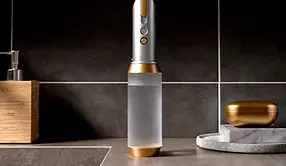
HelloCaddy ME - An AI-powered robotic golf caddy with LiDAR motion tracking and real-time coaching, evolved from iROVA's B2B robotics work into a consumer product.

UNA Modular GPS Watch - The first sports watch built to be user-repaired and upgraded over time. Dual-frequency GPS, SpO₂, 10-day battery, open SDK for developer modules.

Hesper64 (100) Keyboard - A 64% keyboard that unlocks 100-key functionality via a patented Dual-Action key mechanism. Over a decade of keyboard evolution distilled into one hardware innovation.

RayCue ALL-in-One Dock - An 11-port dock for the Mac Mini M4 with 140W charging and 8TB SSD support. Built for creative professionals who need fast, clean access to high-volume files.

P10 Power Bank - A pentagon-shaped modular power bank that transforms into fans, lamps, and more via a five-point magnetic plug system. Built around one question: why can't small devices run continuously like appliances?

SALTGATOR Soft Material Injector - A desktop injection molding tool for soft plastics. The "3D printer for soft materials," built for makers, anglers, and educators who need a safe, repeatable process without industrial equipment.

Gaming & Tabletop
Deadlands 30th Anniversary Celebration - A retrospective book celebrating three decades of the Weird West RPG created by Shane Hensley. Part historical archive, part modern entry point, revisiting the evolution of one of tabletop gaming’s most distinctive settings.

Mycelia North American Expansion - One new action, a new level of tactics. Designed with a strict "less is more" philosophy by the creator of the globally-loved base game.

Cyberpunk Legends - A licensed Cyberpunk Red card game born from a pandemic project, personally encouraged by Mike Pondsmith. RPG depth in a card game format.

The Streets of Port Noir - A solo 5E noir adventure for level 5 characters. Part of Obvious Mimic's ongoing solo adventure line, designed for group campaigns that fizzled before they should have.

Dark Descent - A 5E underground campaign setting inspired by the Sumerian Descent of Inanna. Blood Alchemy, 70+ monsters, and a subterranean world designed to feel like it extends into the realm of the dead.

Seed of Nostalgia - A modern JRPG inspired by Chrono Trigger and Final Fantasy VI. Filler-free design philosophy, guest composers including Hiroki Kikuta.

GUN NOSE - A semi-procedural pixel art detective game built almost entirely by one developer. A custom 3D pixel rendering system and a city where every NPC is an individual, not a stat.

Design & Lifestyle
Tessé Watches — Michel Architect - A Swiss-made watch with a 21-component dial. Production financed before launch. Kickstarter is for storytelling, not funding.

Metal Puzzles Collection - Precision-machined metal puzzles featuring designs from legendary creators including the late Christoph Lohe. Dedicated to his legacy.

KIOKU Japanese Flashcards - A JLPT flashcard system built on spaced repetition science, packaged in Kiribako paulownia boxes from a 150-year-old Japanese workshop.

Outdoor & Sport
ROLL Foldable Bed - A compact motorized bed that stores a real mattress inside a cabinet and deploys in seconds. Designed for small living spaces where comfort and space efficiency usually compete.

Xplate Training System - A portable all-in-one weight system designed by a biomedical engineer with a decade in surgical instrument design. Built to OR-grade durability standards.

CobraPRESS - A lever-based ischemic compression tool designed by a physical therapist for use anywhere. Six years of iteration. Patented flexible nose fulcrum.

Never Miss a Promising Campaign
New crowdfunding projects launch daily across Kickstarter and Indiegogo. GizmoCrowd's newsletter delivers curated campaign selections directly to your inbox every week, highlighting projects before they hit mainstream attention.
Subscribe to GizmoCrowd Weekly
What We've Learned Across Conversations
After 40+ creator interviews, patterns emerge. Here's what consistently separates credible teams from hype merchants.
Serious teams talk about constraints early -The White Rabbit team failed on seven mold iterations before succeeding on the eighth. The Hesper64 keyboard team explored at least two other mechanical architectures before landing on their Dual-Action key system. The Neró Lux team ran lab tests showing 99.99% bacterial reduction within 60 seconds - because they had actually run the tests. Founders worth backing don't just tell you what the product does. They tell you what they had to solve to make it work.
Real builders reduce risk before they launch - The Xplate team ran a full test production round of over 100 units and held off on launching for two full years because the price point wasn't right yet. Tessé Watches had already begun production and fully financed the Michel Architect before going live on Kickstarter — they use the platform for community and storytelling, not funding. These teams aren't asking you to fund the experiment. They're asking you to fund the production run.
Transparency on manufacturing is non-negotiable - The Neró Lux founder personally visited the factory - not just to check costs, but to verify accountability and trust. When a team can walk you through their manufacturing partner's track record and their tooling timeline, that's a signal. When they can't, that's a different kind of signal.
The best innovation is systemic, not spec-driven - The UNA Watch isn't modular because it's a clever engineering trick — it's modular because the founder watched his wife's smartwatch break two days after purchase and the repair cost nearly matched the replacement. The Xplate system was engineered by someone with a decade designing surgical instruments that had to survive thousands of OR uses without a single failure. The strongest campaigns solve a system problem, not just a spec gap.
Post-campaign strategy reveals intent - The KIOKU flashcard team built in-house printing specifically to run micro-runs of 30 niche-language decks - Spanish, German, specialty vocabulary - without minimum order constraints. White Rabbit published a roadmap of future applications built on the same hardware: motion games, health monitoring, baby tracking. Teams that have thought past the funding goal are teams that plan to still be around when your unit arrives.
These patterns align with the lessons from kickstarter campaigns we've documented over time. And don't forget one thing, the best campaigns don't just describe a product, they tell a story. Read more about storytelling techniques for crowdfunding.
For Backers: How to Read a Creator's Signals
Backing a campaign always involves uncertainty so make sure you understand the potential pitfalls by reading our guide to understanding crowdfunding risks before you commit. And before you pledge, look for any red flags.
Green flags: The team explains their engineering constraints specifically - not just what the product does, but what they had to solve to make it work. They acknowledge manufacturing risks and explain how they're mitigating them. At least one founder has directly relevant technical or industry experience. The campaign shows real prototyping evidence, not just renders. There's a post-campaign plan: retail, firmware updates, support, ecosystem.
Red flags: Renders only, no working prototype footage. Certifications (CE, FCC, RoHS) listed as "in progress" with no timeline. Vague answers about who manufactures it and where. No traceable background for the founding team. Aggressive limited-time urgency with no explanation. A product vision that starts and ends at the campaign page.
Before committing to a pledge, take a moment to review the kickstarter questions backers ask before pledging.
Key Themes We Explore
Engineering & Manufacturing Reality
Who builds it, how, and what that process actually looked like, failed prototypes included.
Hardware Risk Mitigation
The decisions teams make before launch: prototype rounds, DFM alignment, factory visits, test production batches.
Creator Transparency
How openly a team communicates about what went wrong and what they'd do differently.
Long-Term Product Vision
Whether this is a product with a roadmap or a campaign with an exit.
Post-Campaign Strategy
Retail plans, firmware commitments, warranty support, and what the team looks like six months after the first units ship.
Apply for a GizmoCrowd Interview
Are You a Campaign Creator?
We feature teams building real things, with real constraints.
If you're preparing your campaign, start here: building anticipation before kickstarter launch is where most creators win or lose.
You're running a campaign on Kickstarter or Indiegogo and want to share your story with over 100,000 crowdfunding backers? We'd like to hear from you. We're not looking for polished pitches — we're looking for founders who can talk honestly about how they built what they built, what they had to solve, and where they're going after the campaign ends.
Once your story is solid, read our guide to marketing your crowdfunding campaign to reach the right backers.