


ExtrudeX 3D Printable Machine on Kickstarter: Build Your Own Filament Loop

Updated: Jun 1

That box in the corner keeps growing. Failed prints. Support material. Purge blocks from every color change. You tell yourself you'll do something with it someday, but what? The ExtrudeX 3D Printable Machine on Kickstarter finally gives you an answer: turn it back into filament. Not someday. Not at some expensive lab. Right on your desk, using a machine you print and build yourself. With over $100,000 pledged and a community of makers ready to close the loop, this campaign proves people are done watching plastic pile up while buying new rolls.
The Waste Problem Every Maker Knows
You're proud of your printer. You love what you create. But there's this other side nobody talks about much—the waste. Test cubes that didn't work. Supports you pulled off and tossed. That entire benchy that warped. Purge blocks from your Bambu Lab filling bags faster than you expected.
Filament isn't cheap. Every failed print isn't just lost time—it's money sitting in a box gathering dust. And it doesn't feel great throwing all that plastic away when you know it could technically be reused. You just never had a practical way to actually do it.
Until now.
How ExtrudeX 3D Printable Machine on Kickstarter Actually Works
The Simple Process
ExtrudeX takes plastic you already have and turns it back into usable filament through a straightforward process. Collect your waste—failed prints, supports, purge blocks, or clean pellets. Break the waste into smaller pieces and mix it with virgin pellets in a ratio that works (60% pellets, 40% waste is a good starting point).
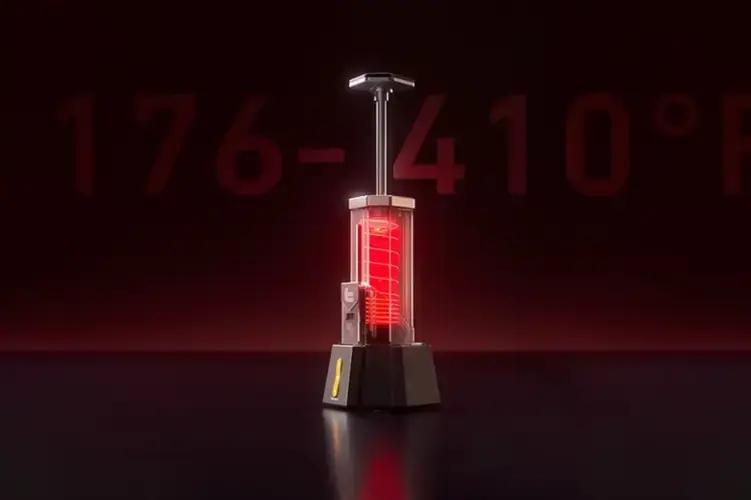
Pour this mix into the top hopper. Inside, a worm gear DC motor turns a screw that slowly pushes the plastic through a heated metal barrel. As it moves forward, it softens, melts, and becomes a smooth flow of molten plastic.
From Molten to Solid
The melted plastic exits through a small nozzle as a 1.75mm strand. It passes through a cooling section powered by a 12V fan, solidifying without bending or sagging. A 3D-printed puller grabs the filament and pulls it at steady speed. You wind it onto a spool, ready to use on your regular printer.
That's it. Waste becomes filament. Filament becomes prints. The loop closes.
Why ExtrudeX Beats Commercial Recyclers
Built for Home Workshops, Not Factories
Most filament recyclers you see online are massive industrial machines. Heavy, expensive, and designed for labs or companies with serious budgets. They take up half a table, cost thousands, and feel completely disconnected from normal maker life.
ExtrudeX fits in about 650mm of desk space. It has a carry handle so you can actually move it around. The total weight is dramatically lower than commercial units because most of the structure is 3D printed—frame, puller, guides, covers. If something breaks, print a new part instead of ordering expensive spares.
Hardware-Only Simplicity
Here's what makes ExtrudeX genuinely different: no firmware to flash, no code to write, no mysterious menu system to learn. Set the temperature on a basic PID controller. Turn on the heaters. Start the motor. Adjust speed with a simple knob.
Everything happens in front of you. The screw, the heater zone, the cooling path—all visible, all understandable. It feels like a machine you built with your own hands because it is.
Designed for Real 3D Printing Life
Mix Waste with Pellets
Most DIY extruders only handle clean pellets. ExtrudeX handles reality. Mix your purge blocks and failed prints with virgin pellets and turn that combination into fresh filament. The design focuses on what makers actually deal with daily, not some idealized clean-room scenario.
Keep materials separate—PLA waste with PLA pellets, PETG with PETG—but within that constraint, use the plastic you already have instead of buying more just to test recycling.
Optional Live Diameter Monitoring
Want to push things further? ExtrudeX supports an optional digital dial gauge mount between the extruder and puller. Install one and watch filament thickness in real-time on a small screen. No extra programming required. Just plug it in and see the numbers.
It's a simple way to bring professional monitoring to a home-built machine without adding complexity or locked-in proprietary systems.
What You Actually Get
Complete Digital Package
Every backer receives comprehensive build files:
STL files for all 3D-printable parts (frame, puller, guides, covers)
Detailed bill of materials with real part names and specs
Direct buy links for every component
Video assembly guides
Email support during your build
Transparent Parts Sourcing
All non-printable parts—motor, heaters, bearings, electronics—come from standard sources. Amazon, AliExpress, local suppliers. No proprietary components. No vendor lock-in. Total cost for non-printable parts typically runs $180-$250 depending on location.
After the campaign, an optional complete kit will be available for backers who prefer everything in one box. But you're always free to source parts yourself and build your own way.
The PETFusion 2.0 Bundle
Close Two Loops Instead of One
ExtrudeX handles 3D printing waste. But what about all those plastic bottles? The bundle adds PETFusion 2.0 files, letting you turn empty PET bottles into usable filament. Cut bottles into strips, melt them, wind onto spools.
Together they form a complete home recycling setup. Bottles become filament. Filament becomes prints. Print waste gets recycled back into filament. Nothing goes to the trash unless it absolutely has to.
What's Included in PETFusion 2.0
STL files for all printable parts
Component list with buy links
Video assembly guide
Email support
Optional commercial license in specific tiers
The bundle saves money compared to backing both projects separately and gives you comprehensive waste handling capabilities.
Commercial License Options
Some tiers include commercial licenses that let you print, build, and sell physical ExtrudeX machines. This is for makers and small businesses who want to turn these designs into products or services.
What you can do:
Build machines for your own use
Sell fully built units to customers
Sell printed spare parts
Use machines as part of your business
What you can't do:
Sell or distribute the STL files
Upload files to marketplaces
Include digital files in products
It's a lifetime license with no per-machine fees and no yearly renewal. Back a commercial tier once, sell physical units forever under your own brand.
Real Results from Real Waste
ExtrudeX isn't vaporware. The creator has been refining this design for three years, building on experience from previous successful campaigns like PETFusion and AeroDry. The current version represents everything learned from testing, failures, and community feedback.
People are already printing planetary gear spinners, plier organizers, and toy bears from recycled filament made with ExtrudeX prototypes. This isn't theory—it's tested, working technology being shared with the maker community.
The Three-Year Journey
ExtrudeX began almost three years ago as a bulky, messy prototype that barely looked like a product. But it worked. It pushed plastic through a barrel and made actual filament from printed parts.
After shelving the project and moving to other designs, the creator kept hearing the same request: "Can we please have a machine to reuse our filament waste? Something simple, affordable, and easy to build at home?"
That repeated interest pulled him back. He stripped down the old design and rebuilt it using everything learned from subsequent projects. Cleaner layout, better motor, improved cooling, modern appearance. The core idea remained, but execution reached a completely different level.
ExtrudeX is what happens when you give a good idea a second life informed by years of real-world maker feedback.
Why This Matters Now
The ExtrudeX 3D Printable Machine on Kickstarter addresses something fundamental about 3D printing culture. We celebrate creation but quietly ignore accumulation. That box of failed parts grows month after month. We all say we'll deal with it eventually.
ExtrudeX lets you actually deal with it. Not by sending it away to some mysterious recycling program. Not by letting it pile up indefinitely. By turning it back into something useful right where you print.
It's built by a maker for makers. No industrial secrets. No locked components. No subscription services. Just open files, standard parts, and a machine designed to work with real waste in real home workshops.
The campaign has momentum. The community wants this. The technology works. Your move: keep buying new rolls while that box grows, or back this campaign and finally close the loop.
If you're building out a maker workshop, GizmoCrowd covers all the desktop fabrication tools worth knowing about across Kickstarter and Indiegogo — 3D printers, filament systems, laser engravers, and CNC machines.
Campaign Update # 1 — December 26, 2025
The ExtrudeX 3D Printable Machine on Kickstarter has reached US$ 170,787 pledged of a US$ 2,000 goal, with 2,329 backers and 6 days remaining.
This week, the creators clarified filament handling. ExtrudeX does not include automatic spool winding by default, but backers will receive separate STL files for a standalone filament winder designed for standard 1 kg spools. A basic parts list and assembly instructions will also be provided. While there’s no final mock-up yet showing the winder attached to ExtrudeX, it is intended to operate independently and simplify longer extrusion runs.
Frequently Asked Questions about ExtrudeX 3D Printable Machine on Kickstarter
Do I need programming knowledge to build ExtrudeX?
No. ExtrudeX is hardware-only with no firmware to flash or code to write. If you can assemble a 3D printer and follow a guide, you can build ExtrudeX.
What materials can I recycle?
Keep materials separate—PLA waste with PLA pellets, PETG with PETG, etc. ExtrudeX handles common 3D printing plastics like PLA, PETG, and ABS, not mixed or unknown materials.
Will the recycled filament work on my existing printer?
Yes. ExtrudeX produces standard 1.75mm filament. If your printer takes 1.75mm and can handle the material type, ExtrudeX filament will work.
Can I buy a complete kit or must I source everything myself?
Both options work. Every backer gets a full BOM with specs and buy links for self-sourcing. After the campaign, complete kits with non-printable components will be available for those who prefer it.
What's the typical cost for non-printable components?
Testing shows $180-$250 depending on location—remarkably affordable for a complete filament recycling and production machine.
About the Author

Michael Green
Chief Editor at GizmoCrowd
Michael has been tracking tech and innovation campaigns on Kickstarter and Indiegogo for over 10 years, covering wearables, health tech, smart home devices, and audio-visual equipment.
Read more...




.png)
